
On September 24, 2026, Japan time, Meta announced “Meta VR Glasses” during its keynote address at its annual event, “Meta Connect.” Weighing approximately 100g, these strapless, glasses-type VR devices will be released in spring 2027 for $1,299.99 (price in Japanese yen yet to be determined).
Prior to the official announcement, I had the opportunity to try out the device at a hands-on event for Japanese media. I’ll leave that experience to a separate review article, but what I want to discuss in this article is what this device symbolizes.
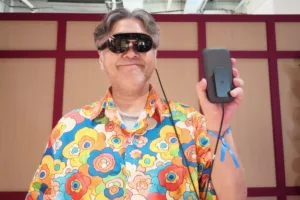
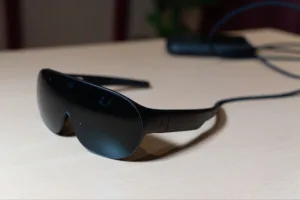
Ten years have passed since the release of the Oculus Rift in 2016. VR has finally moved beyond headsets. And with that comes the relinquishing of its leading role.
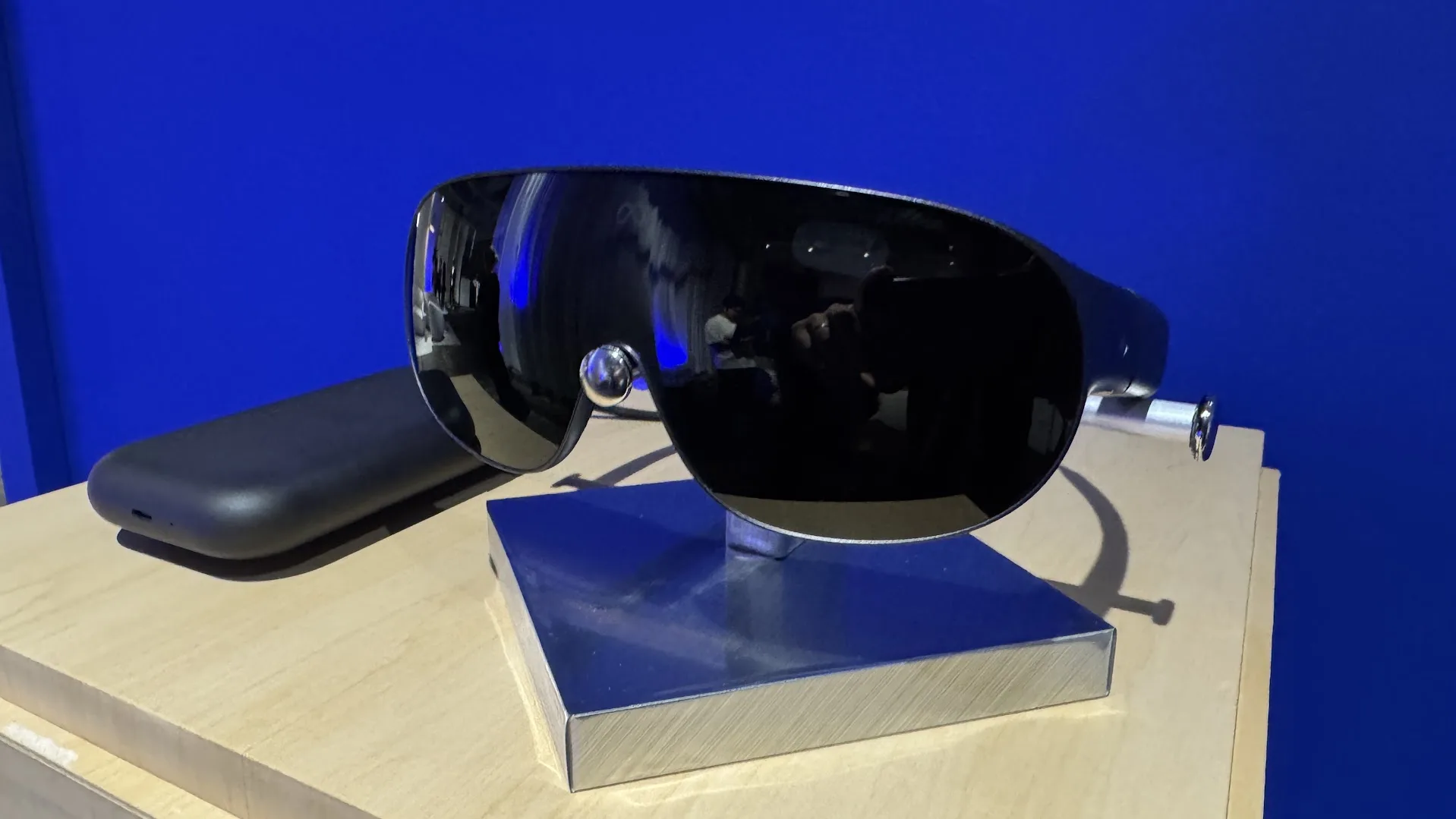
A “sunglasses-type” product that’s been in the works for over 10 years
In a previous review of the Apple Vision Pro, I wrote that “the Apple Vision Pro is a computer, not a headset.” At the time, that was purely a conceptual definition; the device itself was a headset in terms of its form factor. However, the Meta VR Glasses are no longer a headset in the literal sense.
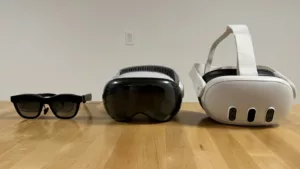
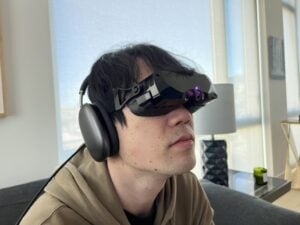
VR Glasses consist of two parts: the glasses themselves and a pack. The processing and battery are routed to the pack via a fiber optic cable, leaving only the sensors and display on the face. There are no straps to tighten around the head, and the sides are open. While they look similar to sunglasses, the front is covered by an opaque display, making them a VR device that allows you to see reality through a camera.
When I actually tried them on, they were so light I forgot I was wearing them. I’d already experienced the power of small size and light weight with Bigscreen Beyond. However, while Beyond is a PCVR system that requires a PC and base stations, VR Glasses are self-contained and don’t require a PC, yet they manage to be this light.
Meta has spent a long time arriving at this form. At Connect Oculus 3 in 2016, Abrash Michael, then chief scientist at Oculus, predicted “VR in five years.” In 2019, they unveiled the “Dome Half 2,” a prototype that was 200g lighter than the original.

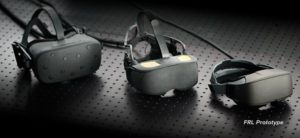
In 2020, they confidently declared, “The next era of VR will come because of our investment and development.” However, that timeframe has been repeatedly pushed back.

At the 2022 research presentation event “Inside the Lab,” they stated that if they could solve the light source problem of their ultra-thin prototype “Holocake 2,” “it would pave the way for sunglasses-type VR headsets.” It was also at this event that they presented “Mirror Lake,” a next-generation concept resembling ski goggles.
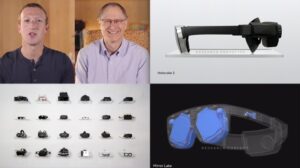
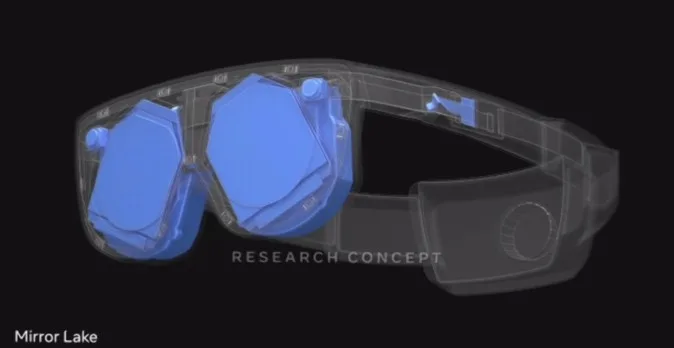
Four years later, that “sunglasses-type” device finally took the form of a product. After 10 years, VR has entered the next generation.
The word “VR” has disappeared from the description.
So, what is the goal of next-generation VR? Let’s take a closer look at a statement from Meta’s official website. The press release describes VR Glasses as a device that “condenses the movie theater, a prime courtside seat, a workspace, and a game console into a pair of glasses weighing approximately 100 grams.”
Despite the product name including “VR,” the word “VR” does not appear in this sentence.
Even after confirming with the representative at the trial event, the product is called “Meta VR Glasses,” without the “Quest” designation. Meta, a company that has been leading the VR industry for 10 years, has removed “VR” from the description of its product’s value. I believe this is where the true essence of this device lies.
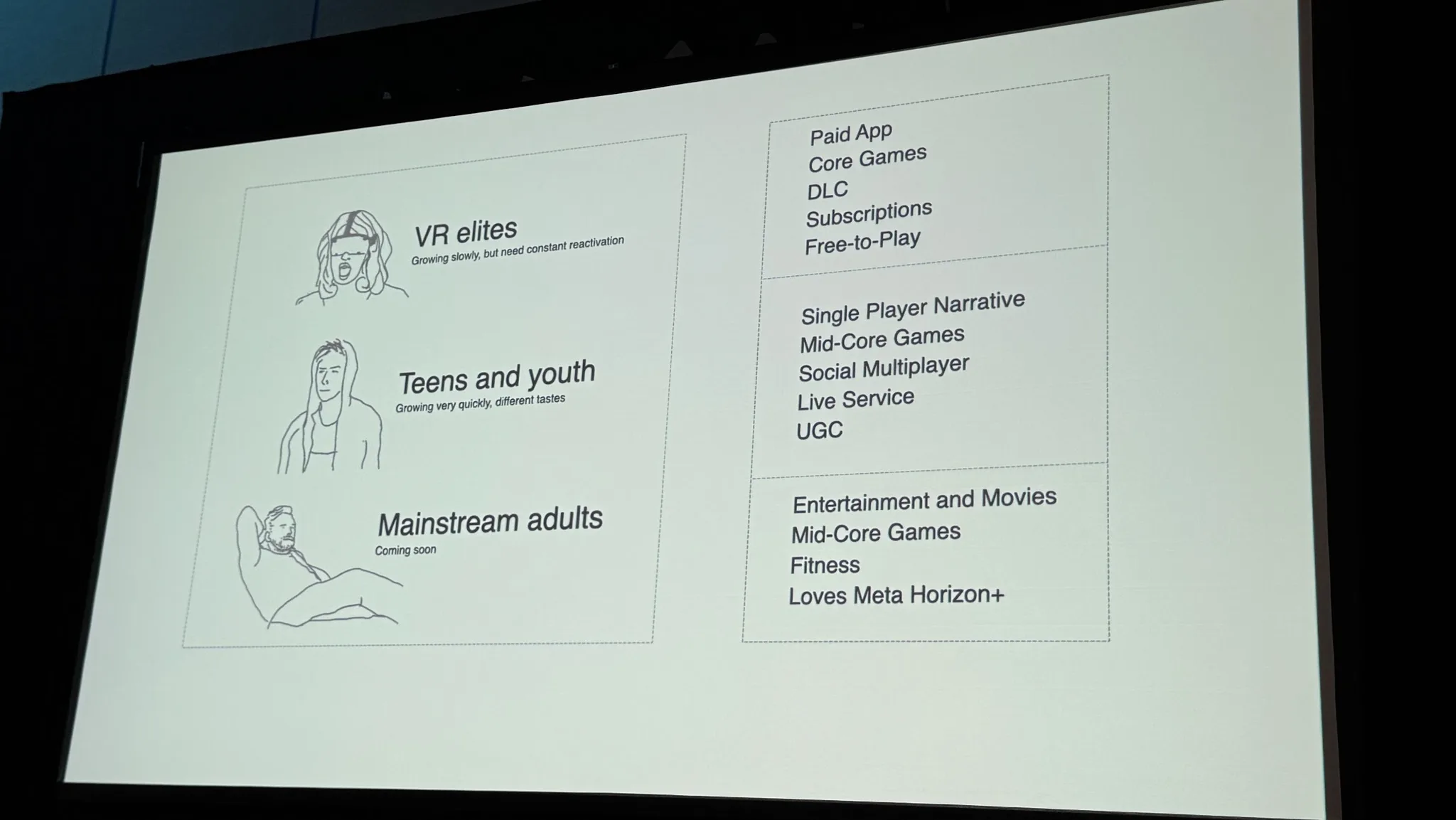
The Meta Quest series has shipped tens of millions of units worldwide, establishing a significant market share for gaming consoles. However, Meta acknowledges that some users find the Quest series, designed for gaming, unsuitable. They find it somewhat heavy, uncomfortable for extended movie or sports viewing, and a little awkward to use in public. At GDC 2026 in March 2026, Meta referred to this user base as “mainstream adults.” VR Glasses are the answer for them.

That’s why Meta has clearly focused its VR glasses on video viewing. It was the first VR device to receive IMAX Enhanced certification and supports Dolby Vision and Dolby Atmos. It also offers Disney+ 3D content and its own “VR Enhanced” format that makes the surrounding space part of the story. IMAX, Dolby, and VR Enhanced—it’s all for the sake of video.
Another key aspect is work. I personally experienced the ability to use VR glasses to transform the desk surface into a keyboard, and I felt it was a reinvention of the keyboard. The position doesn’t shift, and you can type at a good speed without errors (※The keyboard function itself has been implemented since the Meta Quest series. However, the range of work applications for the Quest has been limited until now).
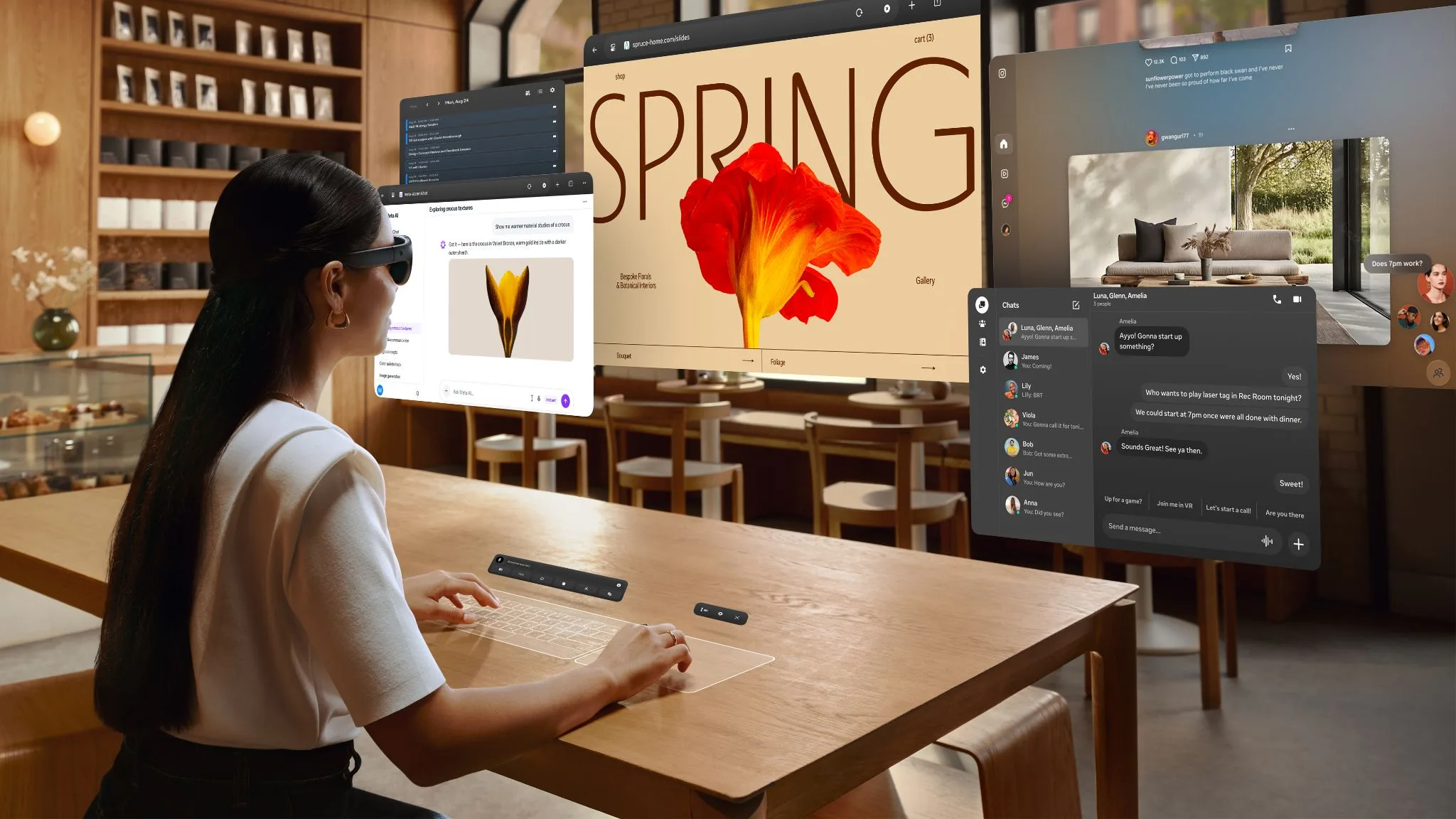
Video and work are also the two main areas that Apple Vision Pro has targeted for use. Starting with video viewing makes sense, as movies, which are watched while sitting for extended periods, are where lightness is most advantageous. VR Glasses are re-establishing the path laid out by Vision Pro, but with the barriers of weight and price lowered. A representative from Meta explains that the quality is what you would expect from a product that costs two to three times as much.
The direction of development also reflects this change. Games are now based on hand gestures, and video and work applications are created using the “Meta Spatial SDK,” which spatializes 2D Android apps into 2.5D. The entire Quest library runs when a controller is connected, but the focus has shifted from games to video and applications.
VR Glasses are devices that can do VR “as well”.
When smartphones absorbed music players and cameras, the phone function relinquished its leading role, becoming just one of many features. However, that doesn’t mean the phone has become obsolete. What’s happening with VR glasses is similar.
The competitors have become “glass” and “AI”.
By abandoning headsets, the competition has also changed. The competitors are no longer just Quest and Vision Pro. They are now also smart glasses, specifically display glasses that project images, and AR glasses that are an extension of that. Their uses are precisely for video viewing and productivity.
A prime example is the “XRAL AURA,” currently under development by XREAL and Google. The AURA uses the same Snapdragon Reality Elite as VR Glasses, combining a wired compute pack with a body weighing less than 95g. The price is capped at $1,500, and it is scheduled to be released in 2026 in regions including Japan. The XREAL AURA is targeting precisely the same applications and user base as the Meta VR Glasses.
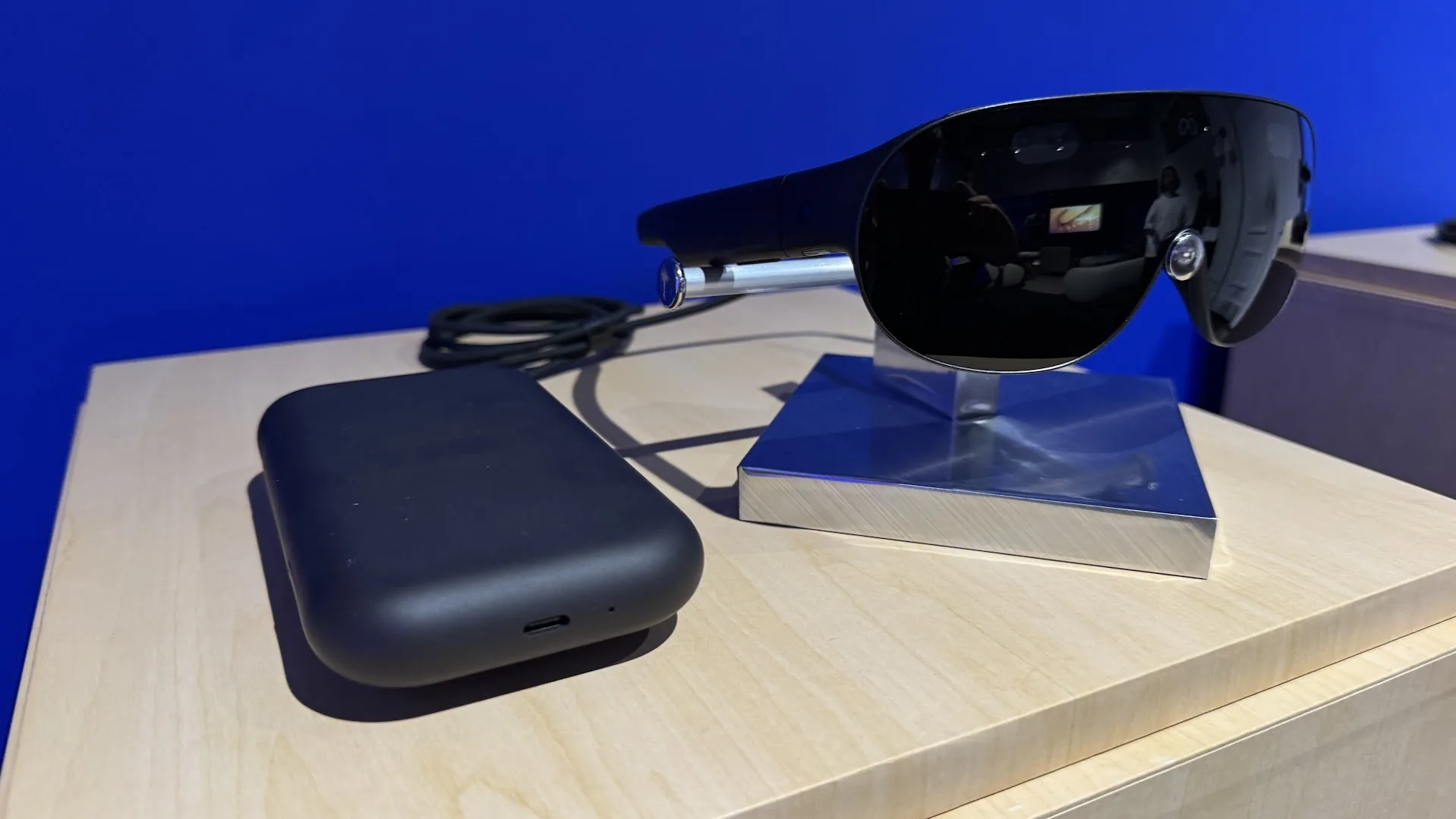
A dispute over the name has also begun. XREAL describes AURA as “spatial computing glasses,” neither a headset nor display glasses. Google, on the other hand, describes the same AURA as “a headset disguised as glasses.”
The difference lies in the optics. VR Glasses project reality onto an opaque display using pass-through technology, effectively erasing the surroundings and immersing you in VR. AURA uses optical see-through, overlaying images while you directly view reality. It’s a choice between immersion and how reality looks. Each has its pros and cons.
At F8 in 2017, Abrash predicted that VR and AR would eventually merge into glasses-type devices, blurring the lines between them. VR devices have become smaller and lighter, and display glasses have become more sophisticated. That prediction is becoming a reality simultaneously through both VR and AR. It marks the dawn of a new hardware genre.
On the other hand, Quest will likely continue as a separate product line for some time, as it is an all-in-one, cable-free device well-suited for games that involve physical movement. While it’s unclear how much smaller it can be made, VR Glasses will not replace Quest for the time being.
The competition isn’t just about hardware. VR glasses have Meta AI agents built into their operating systems, allowing users to play movies and adjust their workspaces simply by speaking to them. Meta AI has undergone a major transformation this year. In April, Meta Superintelligence Labs’ first model, “Muse Spark,” was released, and on September 8th, the personal AI agent “Muse” became available in the United States. Muse not only answers questions, but also opens browsers, fills out forms, and even negotiates on behalf of the user.
Meta also shared a vision that glasses will become the primary means of constantly connecting with AI agents. At Meta Connect in 2025, they called this “Contextual AI” and identified it as the key to future XR.
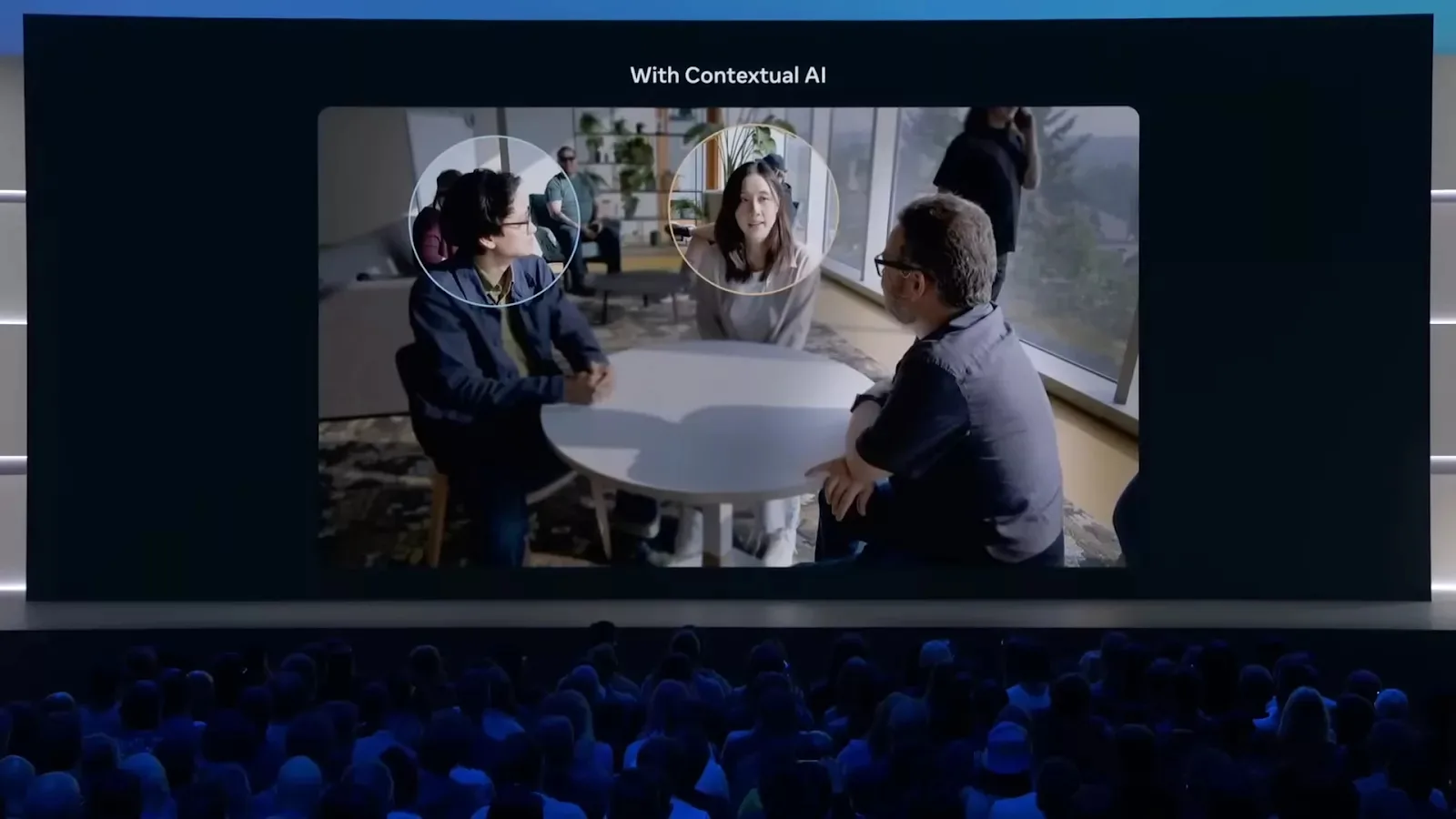
The combination of glasses and AI agents could be a major point going forward. Google’s Android XR comes with Google’s Gemini built-in as standard. Meta has touted Muse as a model created for its own products, choosing the same strategy as Gemini, which integrates seamlessly into Google products. The competition surrounding glasses could also become a competition between Muse and Gemini.
VR glasses, which allow the use of both hands and eyes, are not devices that rely solely on AI. Nevertheless, if an agent is added to set up the workspace and take over tasks, VR glasses can transform from a “screen to operate” to a “trustworthy partner.”
The price and homework for the next generation
Meta VR Glasses will be a device that foreshadows the “next decade.” However, there are challenges.
The first issue is the optics. In Abrash’s 2016 vision of “VR in 5 Years,” variable focus and a wide field of view were key features. However, the VR Glasses announcement did not mention variable focus, and the field of view is a minimum of 70 degrees. While I found the field of view sufficient during my own experience, this was still a point of concern. The resolution of 37 PPD is also only slightly more than 60% of Meta’s benchmark of 60 PPD, which they consider to be “human eye level.”
The trade-off between small size, light weight, and wide field of view is a history of Meta’s research. The aforementioned Half Dome 2 also narrowed its field of view in exchange for being lighter than the original. The next generation has prioritized ease of wear over image realism.
The second point is the price. At $1,299.99, it’s about 2.6 times the price of the Meta Quest 3 (which launched at $499.99). On the other hand, it’s in roughly the same price range as the Aura (up to $1,500) and less than 40% of the Vision Pro (which launched at $3,499). If you look at it as a Vision Pro-class device, it’s cheap, but if you look at it as an extension of the Quest, it’s expensive. It’s a price that will divide opinions depending on who the product is aimed at.
The third issue is the cable. The sight of the pack connected by a cable is reminiscent of 10 years ago. The Oculus Rift was also a wired PC VR. However, the Rift’s cable was a chain that connected to a desktop PC, and we had to wait until the Quest in 2019 for cable-free VR.
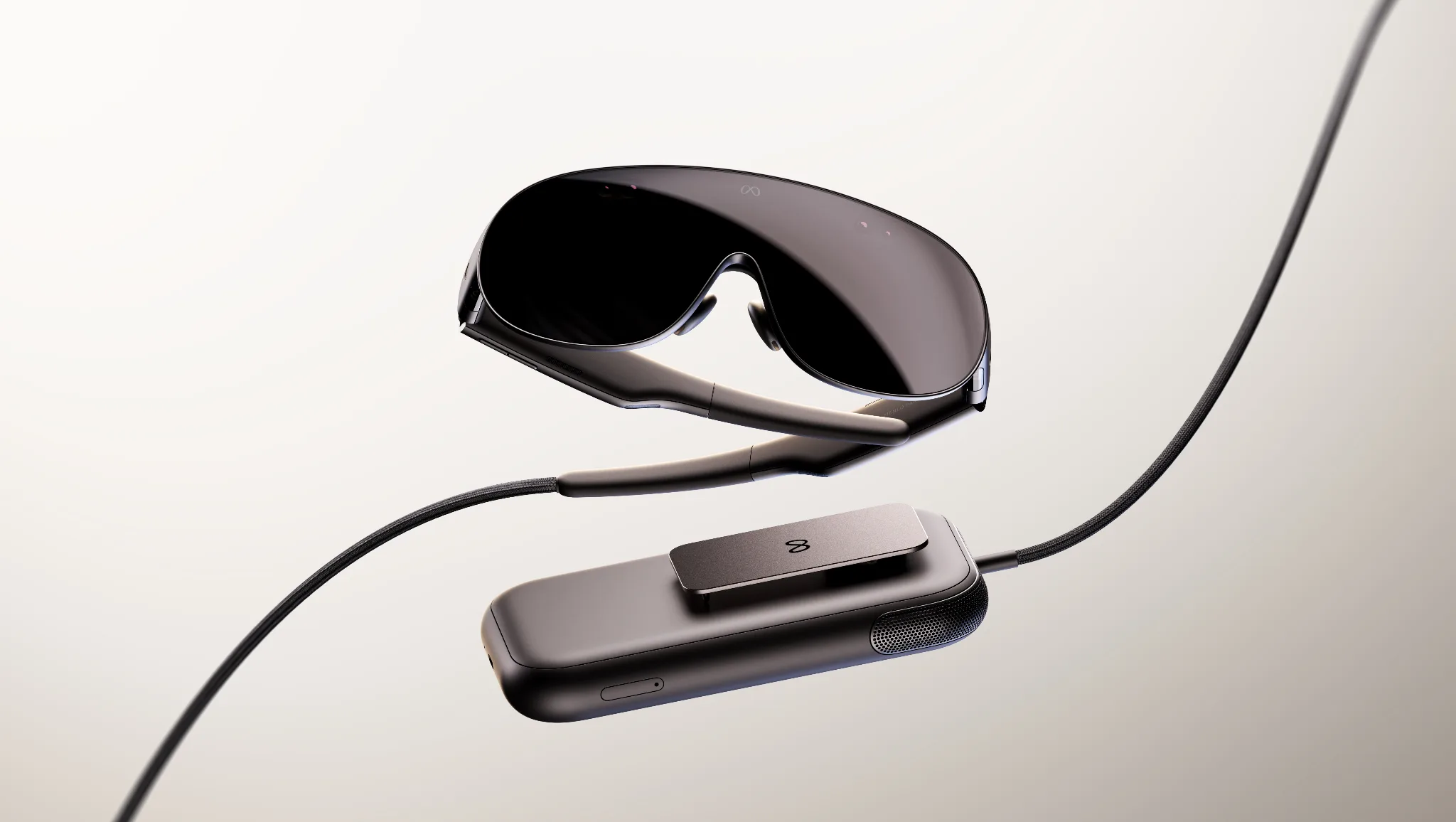
The VR Glasses’ cable connects to a pocket pack. AURA also uses the same wired, separate configuration, and the Vision Pro has an external battery. This should be seen as an industry-standard design to achieve a weight of around 100g. Its overlap with the Rift lies in its positioning as the first generation of a new category. An all-in-one design would be ideal, but that will likely be some time away.
Another point of interest is that it seems safe to assume that a release in Japan is being considered. This is because they held a hands-on event for Japanese media, stated that the price in Japanese yen was “undecided,” and announced and released the new AI glasses model in Japan at the same time.
However, content is another story. Disney+’s 3D streaming started in “some countries,” its immersive sports partners are primarily in the US, and the available services vary by country and region. Netflix is not even on the list of streaming partners. Muse is also currently limited to the US. Because Meta is a device centered on video and AI, we really hope that it will have both content and AI available in Japan at launch.
The impact of this new device is clear. VR’s competitors are no longer other VR devices. It will compete on the same playing field as display glasses, AR glasses, and AI assistants, vying for video content and work time. Those involved in VR content and development will need to pay attention to developments outside of VR.
Ten years ago, VR was an end in itself. With Meta VR Glasses, VR has become just another function alongside movie theaters, workplaces, and game consoles. I don’t see it as a step backward that it’s relinquishing its leading role. It’s a necessary condition for VR to truly spread.
The next decade of VR is about to begin.