
On May 14, 2026, Cover Corporation held a press briefing for its financial results for the fiscal year ending March 2026.
The event took place amidst significant attention on the company’s activities, including the fact that the termination of its metaverse platform “HoloEarth” service was trending on social media.
At the briefing session, President and CEO Tanigo Motoaki and Director and CFO Kaneko Yosuke took the stage to discuss future prospects and the current status of each project.

From simply “expanding” to “deepening”—Cover’s three key investment priorities

At the beginning of the briefing, Tanigo spoke about the current phase of Cover’s development and its future prospects. As this is an important message reflecting on the company’s journey, we have transcribed the entire statement and present it here.
It’s been about 10 years since we founded the company in 2016. Looking back, there were times when we struggled to raise funds, but we poured all our energy into the unprecedented path of the VTuber business and built the business we have today.
Along the way, we have been supported by many talents, creators, and fans, and we are grateful that we have been able to continue our journey and create a large market that can be called the “VTuber economic zone.” Furthermore, as 10 years have passed since our founding, and 10 years have passed since VTubers were born, thanks to the efforts of not only us but everyone involved with VTubers, VTubers have certainly gained some acceptance as a genre of entertainment, albeit a small one.
With the widespread availability of technology and know-how, even individuals can now perform live in venues seating thousands of people, thrilling their fans. This means that we are now in an era where amazing creative work can reach fans directly, regardless of whether or not they have capital.
Furthermore, if we broaden our perspective to the world, we see the emergence of global competitors, such as virtual artists who have taken root in the K-POP movement from South Korea. We are pleased to see these as evidence that the culture has taken deep root. However, while the expansion of the market is something to be welcomed, it is also true that competition is showing signs of intensifying.
In this period of transformation, we, who have been operating our business since its inception, have felt a strong sense of mission as pioneers leading the industry. However, it is also true that the impatience that arose from this feeling has had negative consequences in various aspects. As a manager, I deeply regret causing concern to our fans and resulting in outcomes that contradict our original goal of meeting expectations. Once again, I am determined to put my feet on the ground and confront the fundamental challenges.
So, what does Cover need to do now? This is the theme of today’s discussion. Earlier, I mentioned the need to “resolve to face the situation with our feet firmly on the ground once again,” and I believe that this is an extension of the steady challenges we have been undertaking up until now.

In our financial results presentation materials, we describe this situation as a “period of investment aimed at strengthening our growth foundation.” We are shifting from a “quantitative expansion” phase, which involved increasing organizational size, adding talent, and pursuing diversified business development, to a restructuring of our business structure with “qualitative expansion” as our theme.
To that end, Tanigo cited the following three points as key investment targets:
- Focused support to help affiliated VTuber talents excel.
- Investing in “technology,” which is Cover’s strength.
- Discovering and nurturing the next generation to support the long-term sustainability of the VTuber business.
We will strengthen our support system for each of our currently affiliated talents, continue to invest in “technology,” which has been Cover’s identity since its founding, and also work on discovering and nurturing the next generation.
While strengthening the support system for each of the talents currently affiliated with the company, they will continue to invest in “technology,” which is their identity, and work on nurturing the next generation. Tanigo emphasizes that these are “initiatives to ensure sustainable growth 10 or 20 years from now.”
Furthermore, the company stated that it will focus its investments on “creating talent value,” which is the starting point of its business model, while also promoting media mix strategies, restructuring development projects, and optimizing its supply chain, thereby establishing a strong growth foundation centered on its VTuber business.

Reflections on HoloEarth’s over-diversification and the integration of technology into the “creative foundation”
 (Will HoloEarth flourish as a fan community space? A report on the “Sora Tokino Festival Descent” where she appeared in her natural form – MoguLive)
One of the most talked-about topics of the day was the discontinuation of the metaverse platform “HoloEarth” and the resulting impairment of development assets.

According to Tanigo, this decision is “not simply a business withdrawal, but part of a policy to clearly concentrate management resources on where they are allocated.”
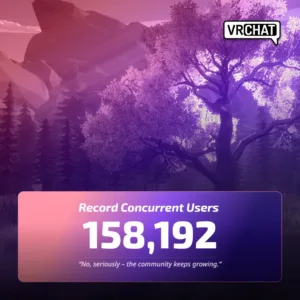
During the Q&A session, one question was posed: “Is the decline of the metaverse itself the cause?” However, Tanigo clearly denied this. He cited platforms that continue to grow in specific areas, such as VRChat and Roblox, and asserted that he “does not perceive the metaverse market as not doing well globally.”

So why did HoloEarth choose to shut down? Tanigo analyzes that the reason lay in “HoloEarth’s unique development method.” “They incorporated various elements, such as holding live events and developing games. If they had focused solely on live events, there might have been potential, but they expanded the business too much.”
In fact, there was a discussion within the company last year about whether or not to continue the service, and although they attempted to revamp it by focusing on the live streaming function, it did not yield the desired results. Another issue cited was that the creation of two options for the talent—the existing streaming app (Hololive) and HoloEarth—resulted in a burden.
In addition, he expressed remorse as a business leader, saying, “Despite it being an important project, I wasn’t in a position to commit to it to that extent. For a project like this, which was crucial to the company’s future, I should have been the one in charge of the project.” At the IR meeting held on the same day, it was also announced that the CEO and CTO would be voluntarily returning their executive compensation.


Although the service will be discontinued, HoloEarth’s development assets will be transferred to the VTuber business and used for talent streaming and live performance production.
Going forward, we plan to integrate the avatar technology and live performance techniques cultivated with HoloEarth into existing streaming apps. This will allow talent to use studio-exclusive assets from home, and implement interactive features to enhance two-way communication with fans, shifting resources towards “strengthening the creative foundation.”
The problem with Holostars’ organizational changes is that they are being implemented from a “supplier’s perspective.”

The restructuring of the male VTuber group “Holostars,” which was announced in April, was also mentioned.
At the beginning of the briefing, Tanigo stated, “I take it very seriously that we have upset our fans, but I understand that this was a necessary decision, albeit a painful one, considering the current situation.” Further explanations were given during the Q&A session.

Tanigo pointed out that a major challenge was that the business development was biased towards a “supplier’s perspective.” They tried to directly apply Hololive’s success in “presenting female talents in an idol-like manner” to male talents as well. He explained that they had not properly grasped the market needs of female fans.
Going forward, the group will restructure its operations and explore approaches tailored to market characteristics, while emphasizing its commitment to continuing to provide appropriate support to individual talents in their endeavors, commensurate with their passion.
The new training project “mekPark” and the importance of unit development

They also explained the new training project “mekPark,” which was just announced recently.
mekPark is a project where three trainees and one director form a unit and aim to debut within a maximum activity period of two years. Its most distinctive feature is that the debut evaluation is conducted on a “unit” basis. Evaluation is conducted based on a multifaceted indicator such as trust, enthusiasm, and determination, with the goal of promotion as a unit.
Regarding the design intent, Tanigo said, “Sometimes, even after debuting, it can be difficult to manage the unit effectively. By having the unit grow together with the director beforehand and then promoting them, we want to make it easier to launch activities after their debut.”

Regarding the future direction of talent support, Tanigo points out the importance of “unit development.”
In fact, Cover has been strengthening its YouTube channel operations on a unit basis since “hololive DEV_IS (*)”. They explained the strategic benefits, stating that “not only can talents grow their individual channels, but the company can also nurture the unit’s channels, allowing both sides to grow through synergistic effects.”
In addition, changes to the organizational structure were mentioned in relation to strengthening talent management. Starting in April, the talent management department will be made an independent department, and Tanigo himself will be in charge of both the talent management department and the VTuber operations department.
By strengthening coordination between management and operations closer to the field, and by establishing a system where the president himself takes ultimate responsibility, they have accelerated internal decision-making. They have created an environment where the entire company can quickly support the challenges of their talents.
(*hololive DEV_IS: A group of female VTubers under the Hololive Production umbrella, and is a “sister group” to the original hololive, hololive INDONESIA, and hololive English. Currently, it includes “ReGLOSS,” which debuted in 2023, and “FLOW GLOW,” which debuted in 2024.)
Rather than focusing on short-term growth speed, we should “sow the seeds” for future leaps forward.

Tanigo presented an optimistic outlook for the overall VTuber market.
Just as the Vocaloid culture, which emerged around 2007, became an aspiration for young creators and eventually grew to produce major artists like Kenshi Yonezu and Ado, it seems more natural to assume that a similar phenomenon will occur in the world of VTubers.
There will undoubtedly be a new generation of talents who look up to currently successful performers, such as Hoshimachi Suisei. Cover says that its role is to propel that talent to stardom.
And at the end of the briefing, Tanigo said the following:
“This season, we are focusing more on sowing the seeds for future breakthroughs than on short-term growth. We are building a team where passionate talent can continue to challenge themselves, refining our unique skills, and expanding the range of expression. We believe that this accumulation will provide the best possible experience for our fans and lead to sustainable growth for the entire industry.”

The fiscal year ending March 2027 is positioned as an “investment period” focused on sustainable growth 10 or 20 years into the future, rather than short-term performance growth.
It remains to be seen how Cover will navigate this restructuring period, and what impact their decisions will have on the VTuber industry as a whole.
Reference
- IR | Cover Corporation
- Financial Results Presentation Materials for the Fiscal Year Ending March 2026 (pdf)
- Notice Regarding the Recording of Extraordinary Losses, Differences Between Full-Year Earnings Forecast and Actual Results, and Voluntary Return of Executive Compensation (pdf)