
BeRise Co., Ltd. and Interface Co., Ltd. have announced that they have completed a proof-of-concept experiment for a work support system for manufacturing sites utilizing digital twins and smart glasses, and have finished the verification process for fiscal year 2025.

BeRise is a company specializing in XR, 3D space construction, digital twins, and UI/UX design. Interface, as an industrial PC manufacturer, possesses expertise rooted in real-world manufacturing operations. Both companies are headquartered in Hiroshima City.
In this demonstration, the interface’s factory was used as the actual field site. Workers wear smart glasses, log in, and check in at their work location, where inspection reports and manuals are displayed. This system allows some of the verification and recording that were previously done via paper or PC to be completed hands-free and on-site.

The captured photographs are automatically linked to product and process information and saved on the server. On-site work status is reflected in real time on a 3D model of the factory space (digital twin), allowing managers to remotely understand “when, who, where, and what work is being done.”

This verification confirmed that the time required to organize work records was reduced by 9.3% per day, and the time required for managers to understand the situation was reduced by 95% per case. It was also confirmed that digitizing ancillary tasks such as checking and filling out paper forms leads to a reduction in the burden on workers.
Hatama Toshiyuki, CEO of B-Rise, commented as follows:
“Digital transformation in manufacturing is not complete with just the digitalization of equipment and management systems. We believe it is crucial to digitize the work, decisions, and records of people working on the factory floor without stopping operations, and use that data to drive improvements.”

Yanagi Hiroyoshi, factory manager of Hiroshima Interface Plant, stated, “We were able to confirm the possibility of workers being able to check and record information without stopping their work, the possibility of reducing administrative burden by automatically linking photographic data with product information, and the effectiveness of being able to monitor the site remotely.”

In the future, we plan to expand this to other lines, enhance remote support functions, and incorporate AI-based image analysis and anomaly detection, developing it into a solution that supports labor savings and eliminates reliance on individual expertise.

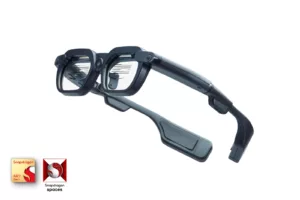
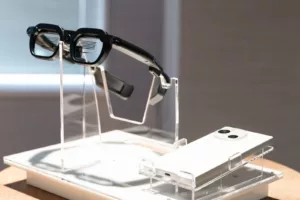
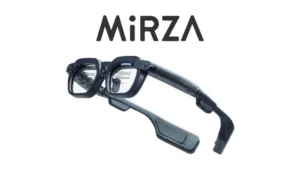
The smart glasses used in this demonstration are the MiRZA, domestically produced AR glasses developed and manufactured by NTT ConoQ Devices. These glasses-type AR glasses were designed and manufactured entirely in Japan, and are priced at 248,000 yen (including tax). Equipped with Qualcomm’s “Snapdragon AR2 Gen 1,” they achieve cable-free wireless connectivity by distributing the processing load with the smartphone. The resolution is Full HD (1920 x 1080), the brightness is 1,000 nits, and they support 6DoF for placing virtual content in real space.
This article is an English translation of an original Japanese article, translated by the Mogura VR editorial team.