
On July 28, 2026, a press conference was held in Tokyo to announce the launch of “LBEC,” a consortium for the LBE market using XR.
“Location-Based Entertainment (LBE) using XR” refers to an entertainment genre that utilizes digital technologies, including XR, which has been gaining popularity overseas in recent years, to create an immersive experience in a physical space. In Japan, the number of permanent and event-based LBE events is also increasing. It is also known as location-based VR or immersive entertainment.
What sets location-based VR apart from traditional VR content is the degree of synchronization between real-world space and virtual content. For example, you can experience walking around vast virtual spaces that don’t exist in reality, such as a space station or ancient ruins.
One of the challenges in Japan is the difficulty in matching companies and creators who have their own location-based VR content with suitable experience facilities. Conversely, there are also cases where companies and facility owners who want to introduce location-based VR content have difficulty finding creators and companies. Furthermore, because the popularity of location-based VR in recent years has emerged at the grassroots level, there is no common standard for content, and every company and creator has had to create and implement content on a trial-and-error basis.
Especially in the case of free-roam VR experiences where visitors can walk around, there are currently no common rules to ensure safety while wearing VR headsets, and this has been left to the discretion of each implementing company.
My impression is that the “LBEC” consortium was established with a sense of awareness of the challenges in those areas.


The consortium currently includes 25 companies from various industries, such as KDDI, Tokyu Land Corporation, JFR, TV Asahi, and MUFG. It appears that STYLY Inc. is leading the operation. At the press conference, an executive from STYLY Inc. explained the current state of location-based VR content and the purpose of the consortium.


LBEC’s envisioned approach is to start by developing production guidelines, with a view to eventually building a content distribution platform.
What was most impressive about the press conference was the strong sense of enthusiasm from STYLY Inc. and the participating companies. Not only were executives from the organizing company, STYLY Inc., present and on stage, but the participating companies not only had their names in the credits but also traveled to the press conference venue, took the stage, answered questions from reporters, and posed for photos.
Furthermore, at the beginning of the press conference, STYLY provided a compelling explanation of the overseas and domestic market conditions for its location-based VR content. From this perspective, it was clear that this press conference was not merely announcing the establishment of the consortium, but rather conveyed a strong desire to “further stimulate attention and demand for location-based VR content through this press conference, and to play a significant role by establishing a considerable presence within this consortium.”
A VR demonstration was also held after the press conference.


The experience we had this time was “AnimaLOOK!!”, a permanent exhibit at Tokyu Resort Town Tateshina in Nagano Prefecture. It is a content jointly planned by three companies: Tokyu Land Corporation, Tokyu Resorts & Stay Co., Ltd., and STYLY Co., Ltd. It is an experience for a wide range of ages that aims to teach about forest ecosystems from an animal’s perspective.
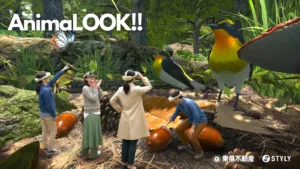
Originally, the content was supposed to use a chair that provides vibrations synchronized with the experience, but this was a simplified demo and did not use that chair. However, even from the demo, it was exciting and fun enough, and the interactivity (grabbing and throwing) utilizing hand tracking was just right. The content, which involves enjoying nature and animals while adventuring, seems like it would be enjoyable for people of all ages, and I have high expectations for the completed version.
Can “LBEC” drive the development of location-based VR?
As mentioned earlier, location-based VR, which is showing signs of accelerating growth in Japan, is already facing many challenges.
It is certainly true that there is a need to solve these challenges while creating a hub that connects content production companies, companies that want to create content utilizing their own IP and facilities, and companies that can provide a comfortable, safe, and secure environment for customers, as well as to boost location-based VR as a whole. LBEC itself is undoubtedly aiming to meet these needs, and their enthusiasm for this was clearly evident at the press conference.
On the other hand, looking at the participating companies at present, there are few content production companies, and if we consider only the power balance in terms of numbers, there are concerns that the organization might end up imposing guidelines and matching conditions that are unilaterally disadvantageous to content production companies.
Whether this organization can overcome these concerns and become a leader in the industry by designing rules that benefit production companies, various ordering companies, and content users alike will depend heavily on the control of the organizing company, STYLY.
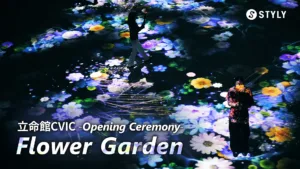
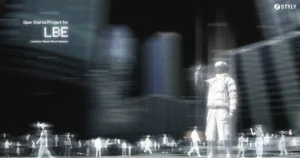
STYLY already has experience in platform creation and operation, and has a strong track record of creating its own content in collaboration with companies. They likely have a deep understanding of both the production and client perspectives. However, the question remains: how far can they take this initiative while maintaining a balanced approach? I feel the fate of this consortium largely depends on that. I will be closely watching future developments.

The official website is here: https://styly.inc/lbec/ja/