
On July 8th, Sony Corporation held its “Creative Solution Showcase 2026” at its headquarters building.
The Creative Solution Showcase is an exhibition held for corporate clients to showcase the latest products, solutions, and the company’s initiatives. This year, under the theme of “Creating Experiential Value,” it consisted of three areas: the “Location Entertainment Zone,” the “Enterprise Solutions Zone,” and the “Content Creation Zone.”
This event showcased cutting-edge equipment and case studies from various industries, but this article focuses on the “Location Entertainment Zone.” We’ll report on the exhibits related to experiential content, a field that has been gaining popularity in recent years.
A unique special zone showcasing Sony’s interactive exhibits.

On the second to fourth floors of the Sony headquarters building, which served as the venue, a wide variety of exhibits were displayed on each floor, and visitors could be seen engrossed in conversations with staff members in various places. Among them, the “Location Entertainment Zone” stood out.
In stark contrast to the other zones, which had the atmosphere of a typical business exhibition, this zone located on the second floor was dimly lit from the entrance, creating a unique mood. Stepping inside, a space like a corridor of light unfolded before me, giving the impression of having wandered into an attraction at a theme park.
Multi-Sensory Shooting: A multi-sensory shooting game that fully stimulates all five senses.

The first thing you encounter after passing through the corridor is a booth titled “Multi-Sensory Shooting.”
At this booth, you can experience a shooting game that integrates Sony’s multi-sensory technologies, including “HapticFloor (floor vibration),” “Grid Scent (spatial fragrance),” “360 Reality Audio (3D sound),” and “wind haptics.”

The most distinctive feature is that not only do the floor and controller vibrate in sync with the sound and visuals, but you can also feel scents and even a breeze. Although I wasn’t able to experience it myself due to timing issues, I could definitely hear a faint scent wafting to the back of the booth.
The sheer power of the Crystal LED screen filling the entire field of vision was impressive, but what was even more striking was how incredibly smooth the visuals were despite the large screen size. It was also memorable that, despite being a business-oriented exhibition, many attendees were excitedly playing the game.
Expand the possibilities and freedom of spatial reproduction displays! “A spatial reproduction system that makes you feel like you’re ‘here’ or ‘it’s here'”

While there were many video-related technologies and solutions on display throughout the exhibition, the booth that particularly caught my eye was the “Spatial Reproduction System that Makes You Feel ‘Here’.”
When it comes to Sony’s “spatial reproduction systems,” the first thing that comes to mind is the “ELF-SR2,” which has recently seen an increase in use at events and in stores. It’s a device that projects 3D images onto a 27-inch display, allowing users to see them with their naked eyes as if they were actually there.
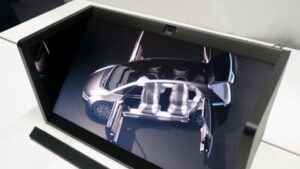
On the other hand, the new spatial reproduction system on display was on a scale many times larger. The booth featured a large display composed of three Crystal LEDs: one on the bottom and two vertically. It can accommodate sizes of 100 inches or more, and according to the person in charge, “If we wanted to, we could even recreate a life-sized car in the space.”

Unlike the ELF-SR2, which allows users to enjoy 3D images with the naked eye, this new system employs 3D glasses. By using glasses equipped with markers and a motion capture camera to acquire the user’s facial position information and gaze, the system allows for a three-dimensional view from any angle.
When I actually put on the 3D glasses and looked through them, the figure of a woman standing next to a real drawing mannequin placed there for comparison came into view. The sense of reality was so strong that I naturally chose to describe her as “standing” rather than “projected.” Even when I moved my head to observe her from a different angle, the image did not blur or break down significantly.

(A real drawing mannequin is placed on the left, and the display shows multiple figures, including the woman in the foreground. This photo appears as if viewed from above, but this is because the camera is positioned to provide an overhead view. If you move your head to change your viewpoint, the view will change to one from the side or from below.)
In another scene, we were able to peek inside the car from any angle we liked. It was so realistic that you could even feel the texture of the interior, and I was surprised at how it was projected as a surprisingly spacious and deep space.

(In the photo, it only looks like a “car interior displayed on three screens,” but when viewed through 3D glasses, it appears three-dimensional. By moving your head, you can also look around the steering wheel and dashboard. The lights on the left and right of the photo are OptiTracks, which track the position of the 3D glasses. Several of these were also installed above the booth.)
The new system’s use cases are envisioned not only in design and creative fields that handle three-dimensional objects, but also in the entertainment and live performance sectors. This was merely a reference exhibit in the research and development stage, but we look forward to its future practical application and development.
The entertainment-oriented robot system “groovots” is attracting attention.

The shooting game seen at the entrance to the location entertainment zone was impressive, but what truly stood out at the back of the venue was the entertainment-oriented swarm robot system “groovots.”
groovots is a system composed of multiple robots equipped with LED panels. At the booth, demonstrations were being held featuring two robots (approximately 0.3m wide x 1.3m high) that moved smoothly while projecting video effects, and a large robot that moved around with CG characters projected onto a large LED panel measuring approximately 2m in both length and width.

At first glance, your attention might be drawn to the LED display, but the key to this system is the “cart” at the bottom of the main unit.
It operates through a meticulously programmed system that specifies “move to a designated location at a specific time and display this image.” The system checks whether it is moving according to instructions as it passes over markers placed on the floor. Incidentally, the development also utilized know-how from pet robots like “aibo” and automotive sensor technology.

Furthermore, groovots has already been implemented on actual live stages. In January of this year, it appeared at Kisaragi Chihaya’s solo concert at Budokan, “OathONE,” from the “Idolmaster” series, and in February, it appeared at the idol group 22/7’s “Nanaji Live in Japan Festa.”
In particular, the Budokan concert in January featured a dazzling display of 12 small Groovots robots, and a large Groovots robot was used to “make the characters walk ‘outside’ the stage,” generating considerable buzz. I myself witnessed the spectacle from the audience, but seeing the robots up close again this time, I was amazed by their size and the clarity of the images, which exceeded my expectations.


According to the person in charge, the Groovots on display was the very same unit that was used during the Budokan concert. As someone who had a strong impression of the stage production as seen from the audience seats, seeing it up close gave me a strange and moving feeling, as if I had met the “person” in person.
Currently, the main use is for stage productions utilizing LED displays, but they plan to explore other uses in the future. For example, they are exploring ideas that go beyond just video expression, such as using lights instead of displays to create “moving lights,” or mounting cameras to capture more immersive footage.
From audio AR to interactive exhibits, a collection of the latest examples.
Unfortunately, we weren’t able to cover all the exhibits this time, but we’ll give you a digest of other noteworthy booths we saw in the same zone.


(At the booth for the audio AR service “Locatone,” we were able to experience demos of the Sapporo Beer Museum’s audio guide “The Story of SAPPORO BEER ~A Compass Chasing the Stars~” and the “Historical Experience Series: The Battle of Sekigahara,” which takes you on a tour of historical sites in Gifu Prefecture. They were highlighting the platform’s strengths, not only in content creation but also in its ability to perform user analysis.)



(This attraction is part of “Little Planet,” an indoor theme park operating in shopping malls nationwide. Visitors can enjoy interactive experiences such as “DISCOVERY GARDEN,” where walking on projected images triggers changes; “DRAW YOUR WORLD” and “SKETCH RACING,” where drawings become three-dimensional and move around on the screen; and “SKETCH DUNGEON,” an AI drawing quiz.)

(FanTable is an interactive tabletop technology. The exhibit is set up as a collaborative cafe, where a camera detects the food on the table and projects images onto it. It also recognizes the position and orientation of illustrations, so moving the plate triggers the corresponding image. Beyond entertainment, it’s envisioned for use in board games, educational materials, facilitation, and architectural simulations.)

(This booth showcases Sony’s location value planning services. Rather than selling products or providing technology, this service offers end-to-end support, from concept development—focusing on “how to bring out the charm of the location and how to express it spatially”—to system implementation. They also offer flexible proposals for other companies’ products depending on budget and objectives.)

(FreFlow is an LED penlight system that creates a sense of unity by wirelessly controlling the LED lights held by the audience at live performances and concerts and integrating them into the stage production.)

(A booth showcasing various features offered on the official app of the Japan Ladies Professional Golf Association as an example of how sports IP is being used.)
Sony’s serious commitment to “creating experiential value”

As mentioned at the beginning, this year’s Creative Solution Showcase consists of three zones, and the Location Entertainment Zone covered in this article is only a part of it.
In the Enterprise Solutions Zone and Content Creation Zone, numerous cutting-edge solutions for a wide range of industries, including broadcasting, healthcare, education, manufacturing, and construction, were on display.

(We also saw exhibits of solutions utilizing VR headsets, such as VR coaching for construction sites and the medical imaging platform “NUCLeUS.”)

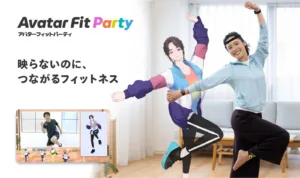
(The booth for “Avatar Fit Party,” an online fitness program using the mobile motion capture device “mocopi.” Visitors expressed their excitement about the experience of “moving around as an avatar” and the fact that “it’s the same device used by VTubers.”)


(Exhibition and explanation of “Live AR Immersive Live,” a live solution that combines real-world and streaming elements, using the markerless camera tracking system “OCELLUS” and the LED display “VENORA” optimized for virtual production.)
Amidst a wide variety of B2B solutions on display, a large location-based entertainment zone was deliberately placed on the second floor near the entrance, which could be considered the “face” of the entire venue. This can be seen as a manifestation of how much Sony values the importance of “experience” and how strongly it intends to promote it as a pillar of its business.
At a pre-event recreational session for members of the press, Nakagawa Kazuhiro of Marketing Sony Inc.’s B2B Division Business stated the following:
“We want to focus more than ever on creating unprecedented experiential value, or even emotionally impactful experiences, through the power of creativity and technology.”

The Sony Group’s purpose is to “fill the world with emotion through the power of creativity and technology.” To achieve this, they are deeply committed not only to providing hardware and systems, but also to the “experiences” themselves that are created by combining them.
This exhibition truly embodied that declaration, providing an exciting space where visitors could experience firsthand the next-generation “experiential value” that Sony envisions.
How will the cutting-edge technologies and solutions unveiled this time permeate our daily lives and entertainment experiences, bringing us new kinds of excitement? We can’t take our eyes off the future of “experiences” that Sony is creating, transcending the boundaries between reality and virtual reality.