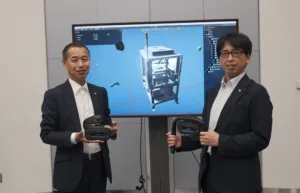
Canon Inc., Yomiuri Shimbun Tokyo Headquarters, and Nippon Television Network Corporation jointly conducted a paid demonstration experiment of the “Tokyo Dome XR Tour” at Tokyo Dome for three days, from September 8th to 10th, 2026.
This tour is an attempt to allow participants to step onto the Tokyo Dome field, an area normally off-limits to the public, and relive memorable moments from professional baseball games using XR technology. It was implemented with the cooperation of Tokyo Dome Corporation and JTB Corporation, aiming to create a new sports viewing experience utilizing XR technology.
What possibilities will Canon’s long-standing focus on XR technology and volumetric video bring to future sports viewing? This report combines on-site experiences with interviews with those in charge.
From “watching a video” to “entering the space.” Experience those iconic scenes right before your eyes!
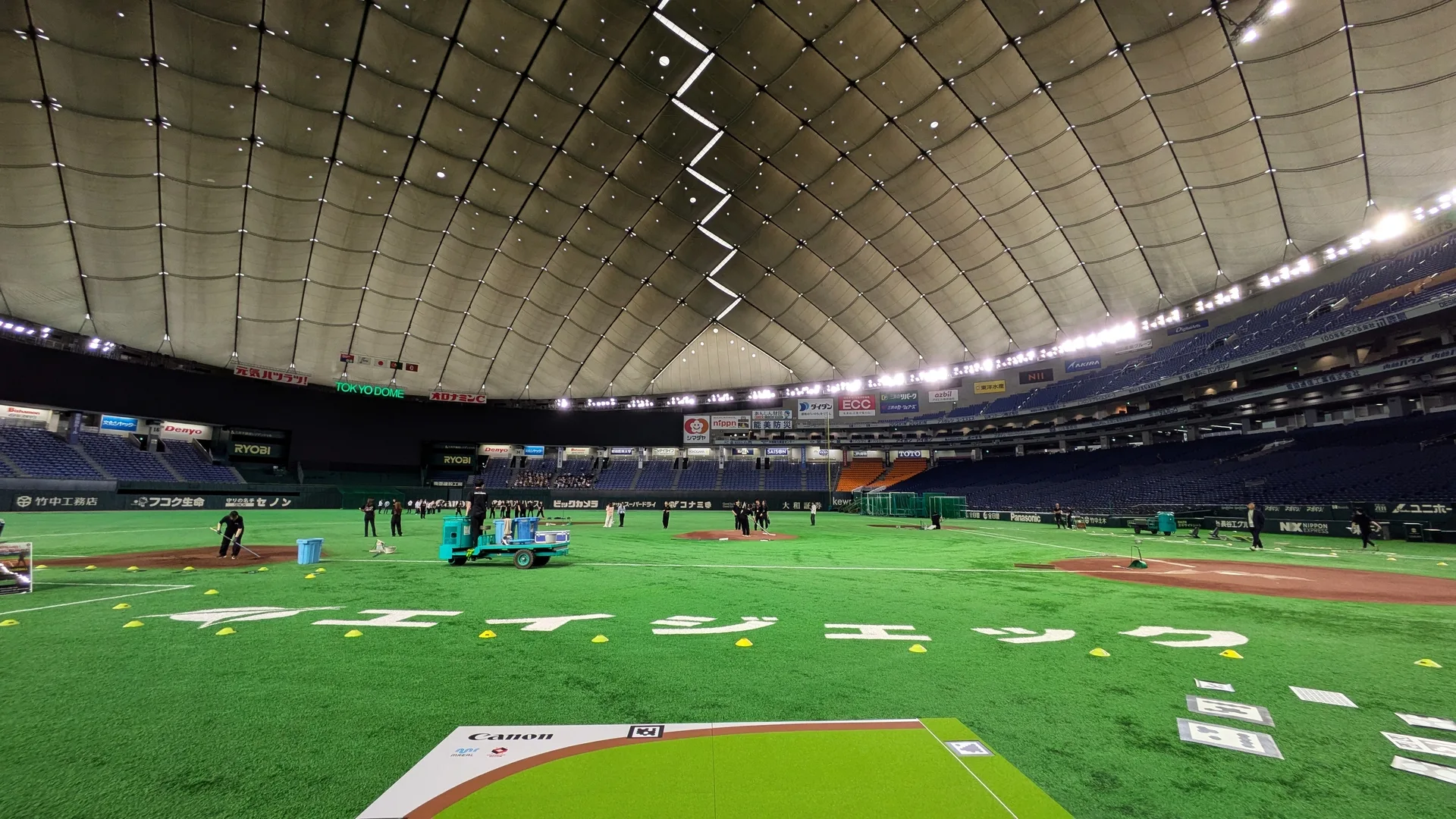
The biggest appeal of this tour is the opportunity to actually stand on the field at Tokyo Dome and experience “past games” superimposed onto the real space.
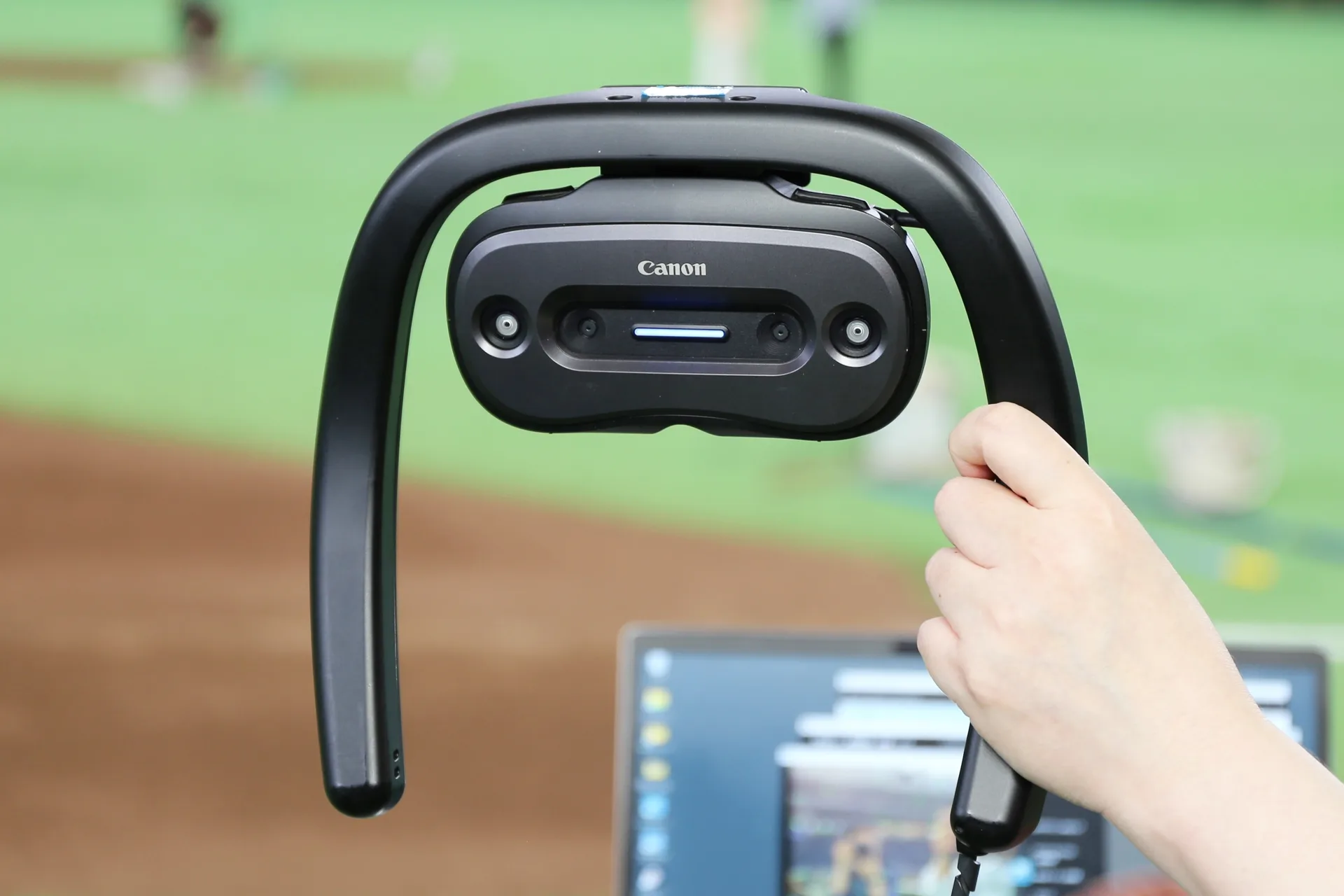
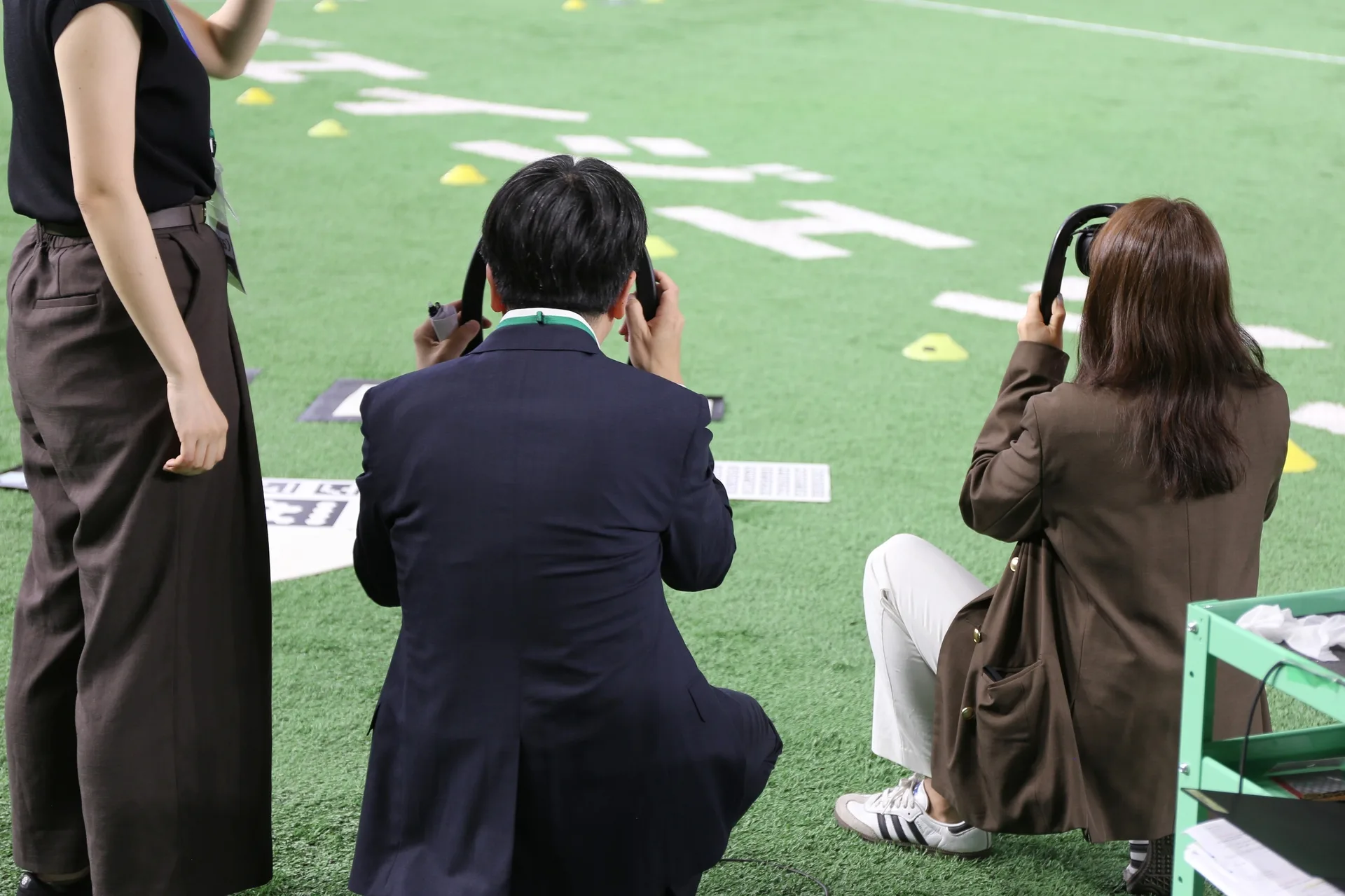
The system used for the experience is Canon’s MR system, “MREAL“.
Unlike typical VR headsets that completely cover the head, this system uses handheld goggles that you look into. When you view an empty field through the MREAL goggles, life-sized players appear in 3D, and the movements of an actual match are faithfully recreated right before your eyes.
The content to be recreated includes numerous memorable moments, such as the moment pitcher Masahiro Tanaka achieved his 200th career win in Japan and the US, Kazuma Okamoto’s two-run RBI single, and Yoshihiro Maru’s game-winning grand slam.
MREALs are placed at various points near first base, third base, and the batter’s box, allowing you to enjoy the scene from different perspectives. There is also a corner where you can look down from a table that mimics the entire baseball field and get an overhead view of the miniature players moving around.
Experience the thrill of being right next to the action, and enjoy a virtual perspective that offers an overview of the whole scene.
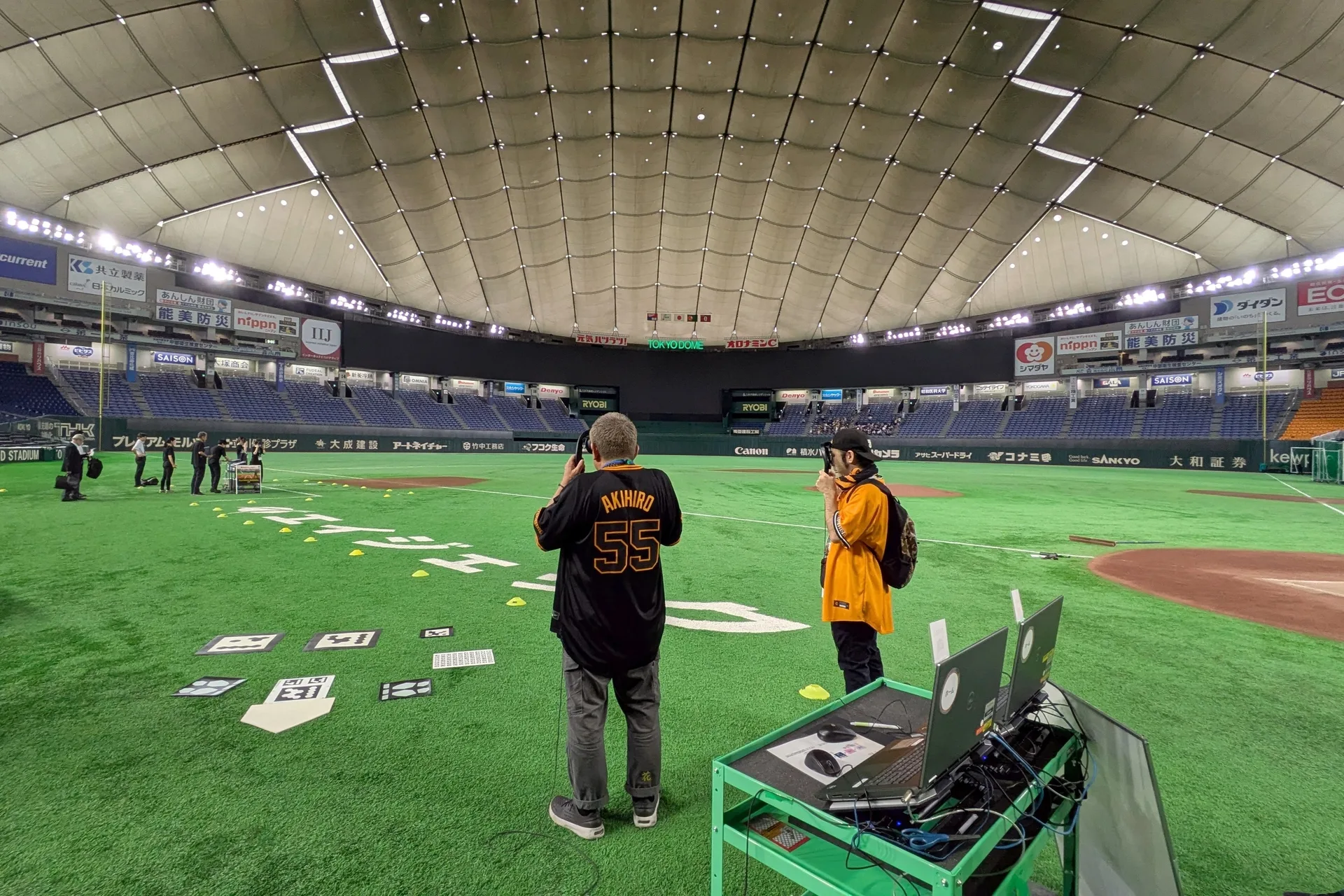
I experienced it myself, and the first thing that surprised me was its overwhelming realism.
Standing near first base and peering into the MREAL, the players appeared on the empty field. Looking around, I saw that not only the infielders but also the outfielders in the distance were positioned in 3D, and everyone was moving in real time. When I took off the MREAL after the experience, I was momentarily confused, thinking, “Huh? Where did they go?” because they had blended so naturally into the space.
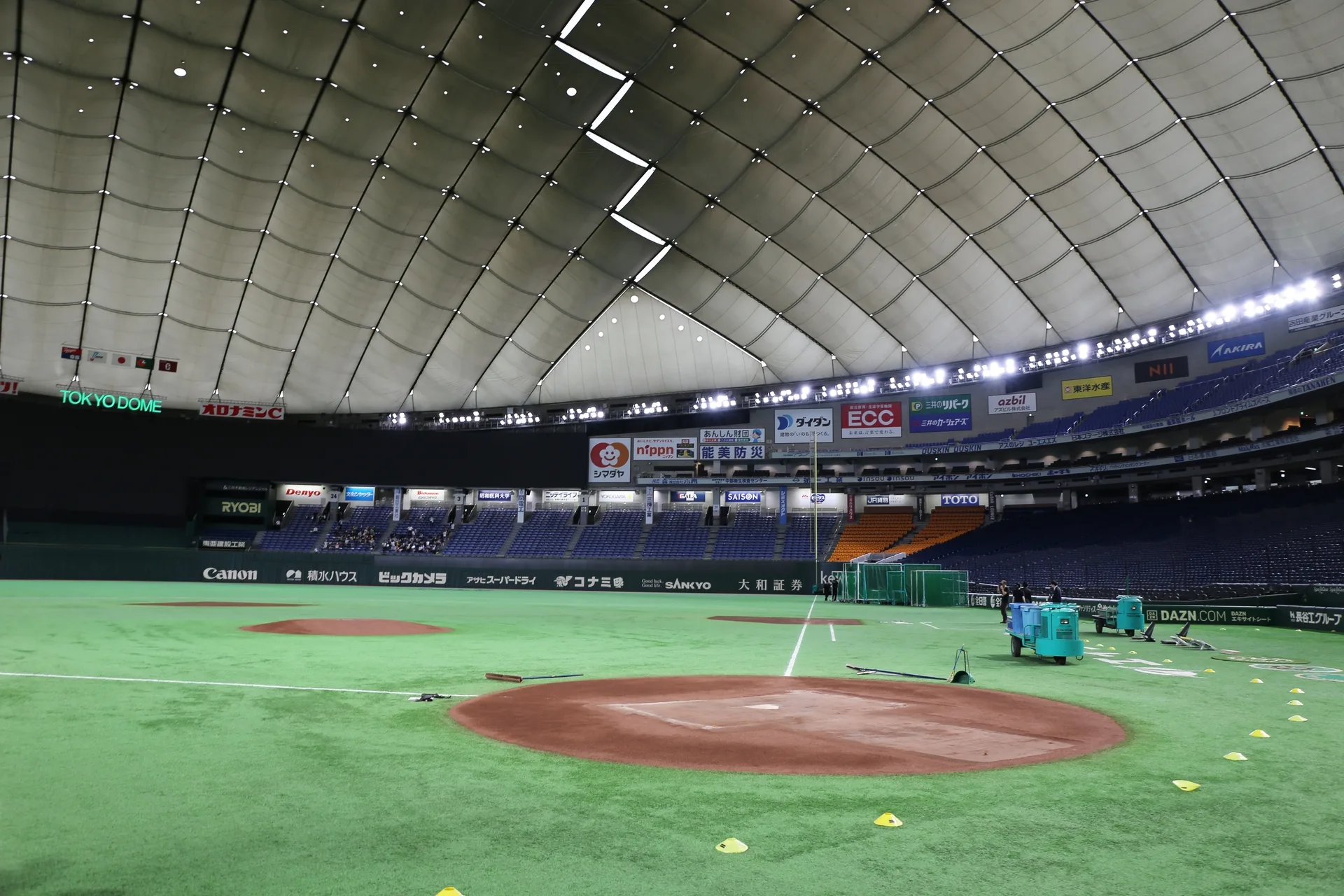
(Although no one is visible in the real world, when you look at MREAL from each experience location, you can see the players standing there as if they were actually in a match.)
When the game starts playing, the players all start moving in unison in sync with the pitcher’s throw. The sheer power of the runners sprinting towards first base is incredible, so much so that I couldn’t help but exclaim “Whoa!” There’s also a feature that displays the ball’s trajectory as a line, allowing you to clearly see the professional pitcher’s throw.
The most impressive experience was the VR experience in the batter’s box (*). I stood right next to the catcher and watched the moment the pitcher threw the ball from up close. Seeing the ball pass by in front of my eyes at incredible speed made my body jump involuntarily.
(*Unlike the MR experience at first and third base, due to space limitations, the experience at the batter’s box used a VR representation that “virtually projected the entire space.”)
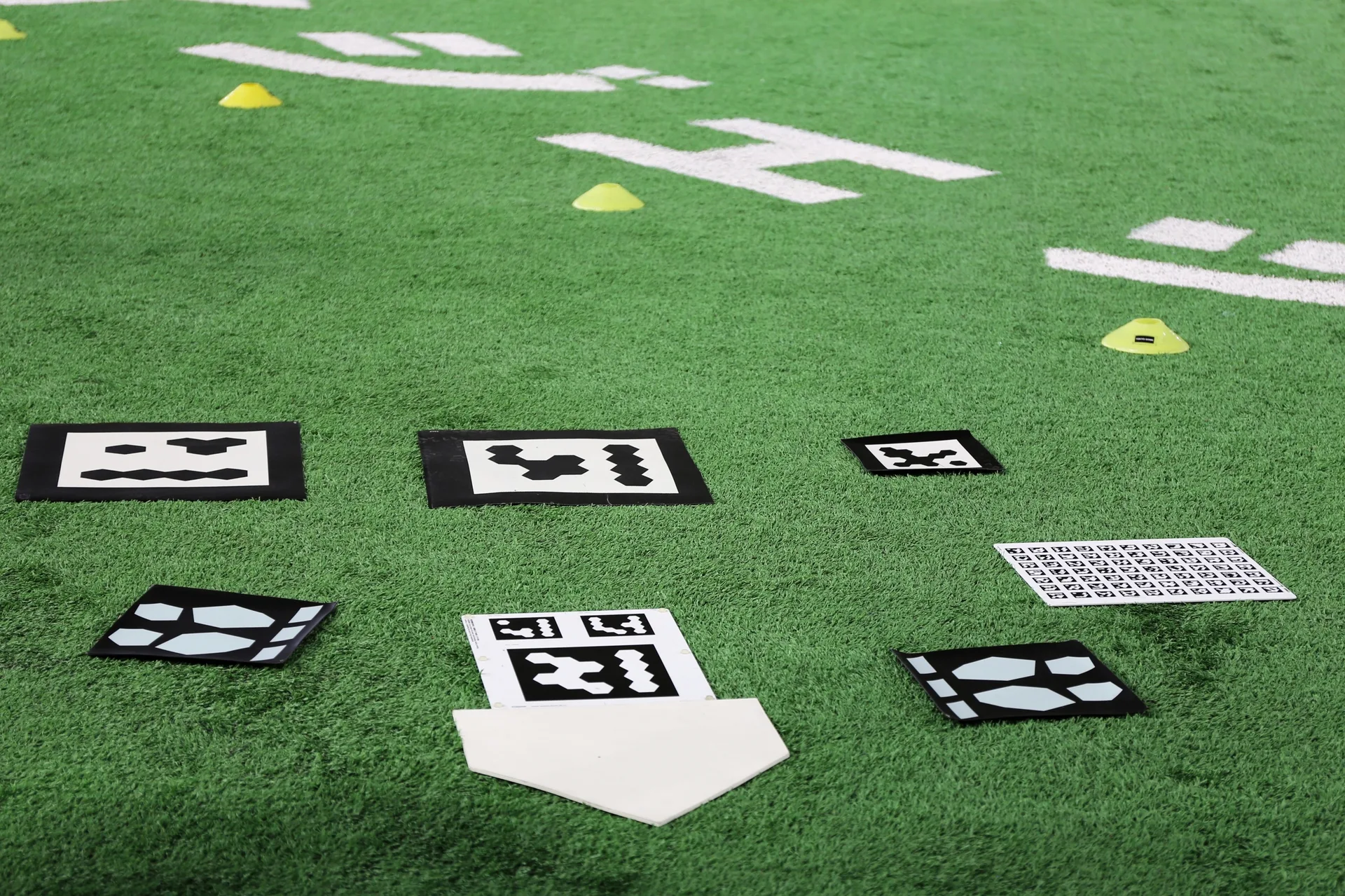
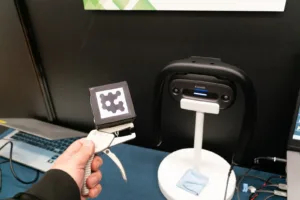
(An area where you can experience VR in the batter’s box. When you look into the MREAL, your position is measured by markers placed at your feet, and a virtual Tokyo Dome and the players appear, starting from the home plate.)
In addition, since MREAL can be moved freely while being held, it is possible to stand in front of the catcher during scene playback and experience the pitch from a direct frontal perspective.
Participants who were actually looking through the MREAL from the catcher’s position were so surprised by the force of the ball flying towards them that they let out excited cries of “Whoaaaaa!?”

(This is footage from the catcher’s perspective. Because volumetric video records the entire space, each person experiencing this scene can view it from any position and any viewpoint they like.)
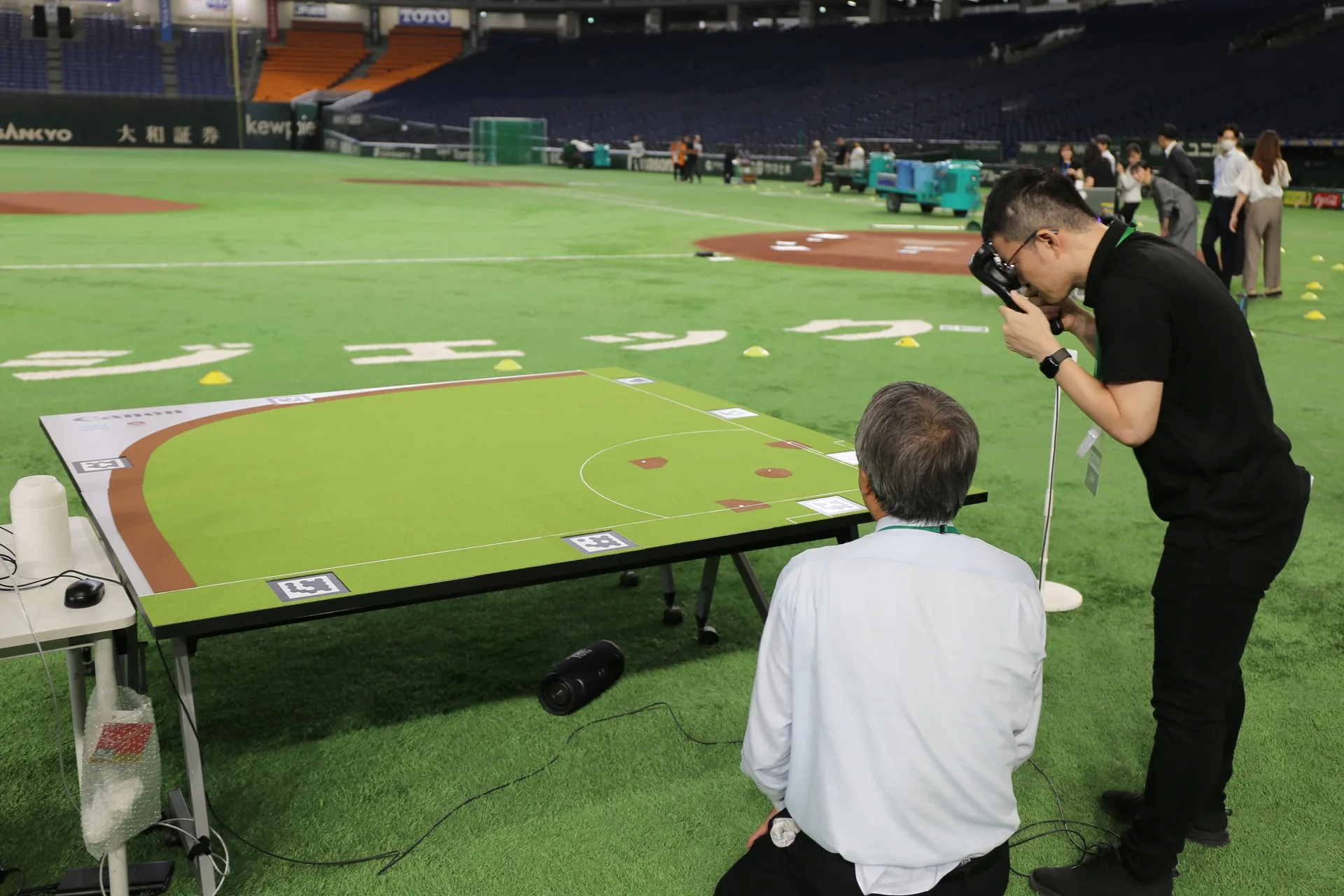

On the other hand, there’s an experience where miniature players are displayed on a table that recreates a baseball field, allowing you to observe the entire game from a bird’s-eye view. You can carefully observe with your own eyes the team’s formation, the coordination between players, and defensive movements, which are things that can’t be fully captured on television broadcasts.
From the exhilarating, direct experience of being at bat to a comprehensive analysis from Gulliver’s perspective, you can enjoy memorable moments from various scales and viewpoints. I felt this was a major appeal unique to XR, something you can’t experience with television broadcasts.
A “volumetric video system” that digitizes an entire space.
This high level of immersion is supported by Canon’s proud “Volumetric Video System.”
Volumetric video is a technology that captures the entire space, converts it into 3D data, and enables the generation of images from any angle. Canon positions this as “a technology that converts time and space into 3D data” (Reference: What is Volumetric Video? | Canon Global).

The company, which also has its own dedicated volumetric video shooting studio, introduced this system to Tokyo Dome in 2023 in collaboration with Nippon Television and Yomiuri Shimbun to “create a new way to enjoy watching baseball.” This has enabled the creation of 360-degree replay videos and free-viewpoint live streaming on the distribution platform Blinky. This “Tokyo Dome XR Tour” is the latest initiative that evolves the accumulated volumetric data from “simply viewing it on a screen” to an experience of “stepping into that space.”
From television broadcasts to personal viewing spaces
Canon has been involved in the development of XR technology for many years, including “MREAL,” which is used in this demonstration experiment, and “EOS VR SYSTEM,” which supports VR shooting.
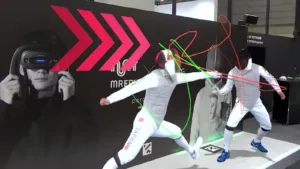
In 2025, they plan to exhibit an XR fencing booth at an event, demonstrating their commitment to initiatives in various fields beyond baseball. We spoke with the person in charge to find out how sports viewing will change in the future.
—Could you tell us about the background of this initiative?
Canon representative:
In recent years, the ways in which people watch sports have diversified, and it has become difficult to attract young people and casual fans without offering new experiences beyond television broadcasts. While exploring new ways of presentation using volumetric data, we arrived at the form of this XR tour.
Traditional television broadcasts involved passively watching footage selected and edited by a switcher. However, this technology allows viewers to freely choose the location and angle they want to watch. A major advantage is the ability to enjoy the game from a unique, niche perspective, such as focusing solely on the base-running form of a particular player.
—What kind of developments can we expect in the future?
Canon representative:
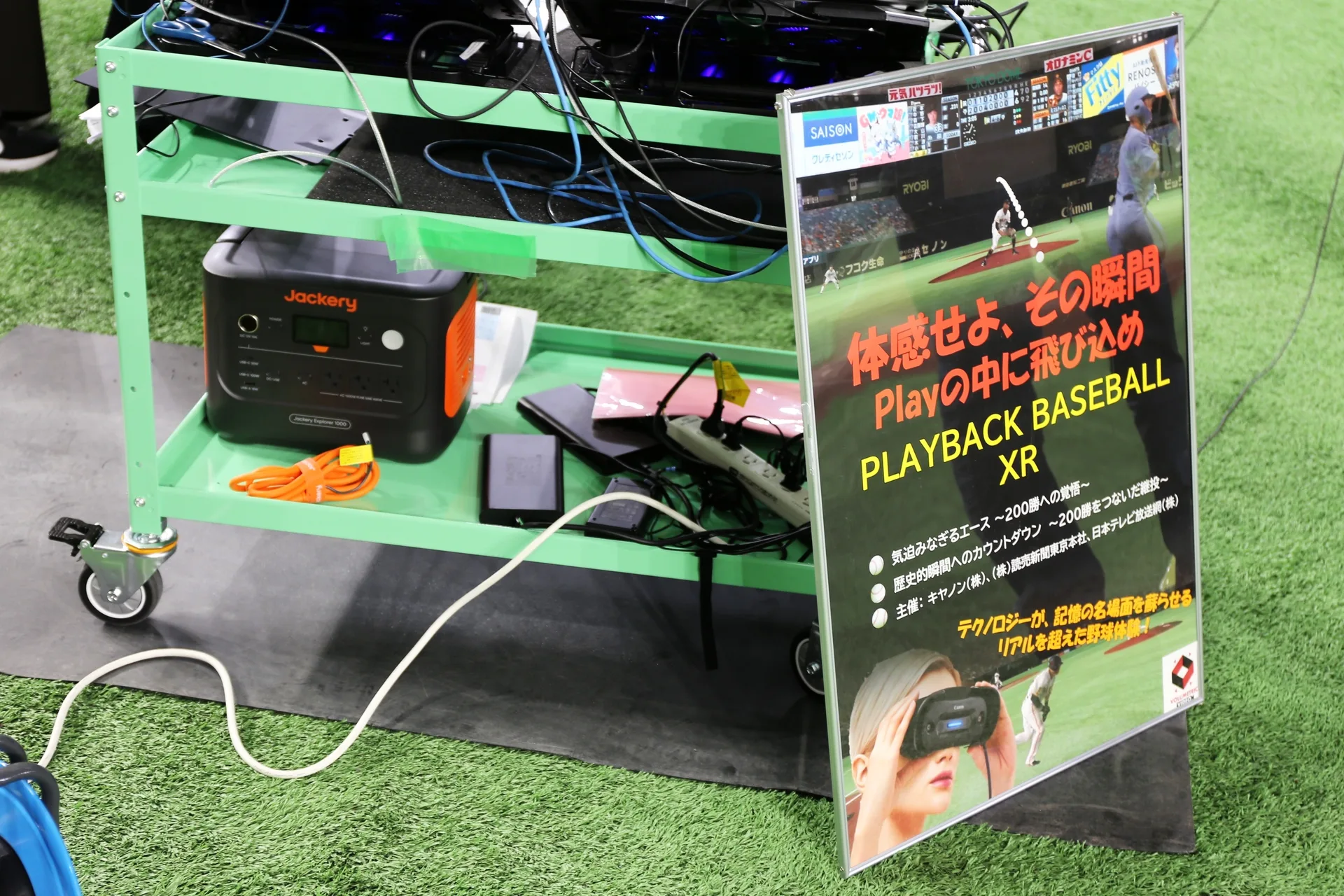
Because volumetric video has a large data size, this experience uses a wired connection to a PC. However, with recent advancements in communication technology and data reduction, we are considering how to make it possible for many people to enjoy it simultaneously wirelessly in the future.
In the future, it may even be possible to experience live game viewing with multiple people sharing the same game space. For example, it is becoming technically possible to “process data from games being held at other venues in real time and watch them live at Tokyo Dome, giving you the feeling of being there in person.”
—This is a sports experience that transcends geographical limitations. What are the possibilities for collaboration with local communities?
Canon representative:
I believe this presents great potential for regional cities, where opportunities to host official matches are limited.
For example, archived game data could be brought to local stadiums for screening, or VR could be used to set up booths in shopping malls and other locations where people can see life-sized players up close.
We see very high demand for this in terms of attracting tourists, promoting regional development, and ensuring the sustainable use of sports content as an asset.
—What are your thoughts on future challenges and prospects?
Canon representative:
To implement this system, approximately 100 cameras will need to be installed. While this technology has a proven track record in sports other than baseball and in entertainment, and can be used in a wide range of applications, the challenge lies in how to prepare the shooting environment for each field, where the location and presentation style differ.
However, with the reduction of data size and advancements in communication infrastructure, the areas in which volumetric video can be used will undoubtedly expand. We will continue development to provide diverse viewing experiences tailored to different devices and situations.
The future of sports viewing: where the boundaries between real and virtual blur.
Even for someone like me, who spends a lot of time in VR worlds and wanders around various virtual spaces on a daily basis, this experience had a huge impact.
The Tokyo Dome’s actual physical space and recorded footage of events that took place there are superimposed with high precision, overlaying even the “excitement” of the game, recreating it right before your eyes. It’s a different feeling from playing in a completely CG world; it’s like the boundary between reality and virtuality melts away.
This project, which fuses Canon’s technology with its media assets, represents one of the new possibilities for sports viewing in the future. Including the “live viewing experience where multiple people share the same game space,” which was mentioned in the interview, we will be keeping a close eye on its future development towards social implementation.